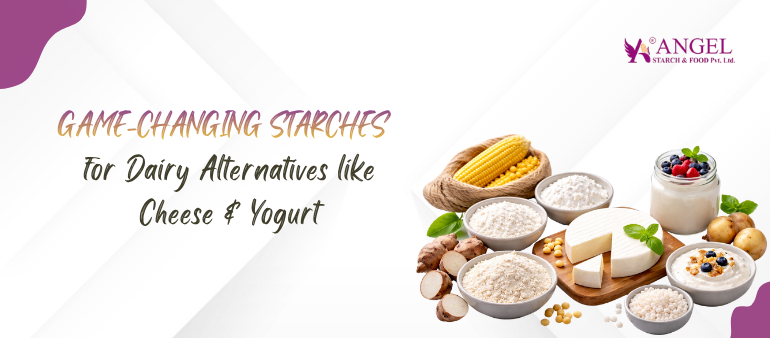
The global food industry is undergoing a major transformation as consumers increasingly embrace plant-based dairy alternatives. Vegan cheese and plant-based yogurt are no longer niche products—they are mainstream offerings driven by health awareness, sustainability concerns, lactose intolerance, and ethical choices. However, creating dairy alternatives that truly match the taste, texture, and stability of traditional dairy remains a significant challenge for manufacturers. This is where functional starches play a crucial role. At Angel Starch, advanced starch solutions are developed to help food brands overcome formulation challenges and deliver high-quality dairy alternatives. In this blog, we explore how game-changing starches are transforming plant-based cheese and yogurt, and why they are essential ingredients in modern dairy-free innovation.
The Growing Demand for Dairy Alternatives
The global market for dairy alternatives is expanding rapidly, with strong growth in vegan cheese, yogurt, spreads, and fermented products. Consumers expect plant-based options to deliver:
- Creamy and smooth mouthfeel
- Consistent texture throughout shelf life
- Stable structure without water separation
- Melt, stretch, and body similar to dairy
Unfortunately, many plant-based products struggle to meet these expectations due to the absence of milk proteins and dairy fats, which naturally provide structure in traditional cheese and yogurt. To bridge this gap, manufacturers rely on functional ingredients, and starches have emerged as one of the most effective solutions.
Why Texture Is the Biggest Challenge in Vegan Cheese & Yogurt
In conventional dairy products, proteins like casein and whey create a strong network that binds fat and water. In plant-based formulations made from soy, almond, oat, coconut, or cashew, this protein structure is missing. As a result, manufacturers often face:
- Grainy or chalky textures
- Weak gel formation
- Excessive syneresis (water release)
- Poor melting and elasticity in vegan cheese
- Thin or unstable yogurt consistency
Without the right functional system, even the best plant-based ingredients fail to deliver a satisfying consumer experience.
The Functional Role of Starches in Dairy Alternatives
Starches are no longer used only as basic thickeners. Modern starch technology allows starches to perform multiple critical functions in dairy-free formulations.
1. Texture and Mouthfeel Enhancement
Functional starches create a smooth, creamy body that closely resembles dairy fat. They help eliminate graininess and provide a rich, spoonable texture in yogurts and spreads.
2. Water Binding and Stability
One of the biggest advantages of starches is their excellent water-holding capacity, which prevents separation and improves shelf-life stability.
3. Fat Mimicking Properties
Modified starches can replicate the sensory properties of milk fat, delivering creaminess without increasing saturated fat content.
4. Process and Heat Stability
Advanced starches withstand heat, shear, and pH variations during processing, fermentation, and storage.
Game-Changing Starches Used in Plant-Based Cheese & Yogurt
Choosing the right starch depends on product type, processing conditions, and desired texture. Below are some of the most impactful starch types used in dairy alternatives.
Modified Tapioca Starch for Vegan Cheese
Modified tapioca starch is widely recognized for its superior performance in cheese analogues. Key benefits include:
- Excellent meltability
- Stretchy, elastic texture
- Glossy and appealing appearance
- Neutral taste profile
These properties make it ideal for applications such as vegan mozzarella, cheese slices, blocks, and spreads.
Cross-Linked Starches for Yogurt Stability
Cross-linked starches are designed to remain stable under mechanical stress and high temperatures. Benefits for yogurt formulations:
- Consistent viscosity
- Improved gel strength
- Reduced whey separation
- Stable texture during storage
They are especially useful in fermented plant-based yogurts and flavored yogurt drinks.
Pre-Gelatinized Starches for Instant Applications
Pre-gelatinized starches hydrate instantly without the need for heat. Advantages include:
- Immediate thickness
- Smooth mouthfeel
- Faster processing time
These starches are commonly used in instant yogurt mixes and ready-to-eat dairy alternative desserts.
Improving Vegan Yogurt Texture with Starch Systems
Many plant-based yogurts suffer from thin consistency and water separation, which negatively impacts consumer acceptance. Functional starch systems solve these issues by forming a stable gel network that binds water effectively. With the right starch selection, manufacturers can achieve:
- Spoonable thickness
- Smooth, creamy texture
- Consistent quality throughout shelf life
- Improved sensory appeal
This allows plant-based yogurts to closely resemble traditional dairy yogurt in both appearance and mouthfeel.
Achieving Melt and Stretch in Vegan Cheese
Meltability and stretch are critical performance factors, especially for cooking and pizza applications. Without dairy proteins, achieving these characteristics is challenging. Starches help by:
- Creating elastic gel matrices
- Interacting with plant proteins and oils
- Responding effectively to heat
This enables vegan cheese to melt evenly, stretch naturally, and maintain structure—key attributes consumers expect from cheese alternatives.
Starches vs Gums: A Smarter Choice for Clean Labels
Many dairy alternative formulations rely on gums such as carrageenan, guar gum, or xanthan gum. While effective, they often raise clean-label concerns. Starches offer several advantages:
- Higher consumer acceptance
- Familiar, plant-derived ingredients
- Better cost efficiency
- Greater flexibility in texture customization
Modern modified starches can replace or reduce gum usage while delivering superior functional performance.
Clean Label Trends Driving Starch Innovation
Today’s consumers carefully read ingredient labels and prefer products with:
- Simple, recognizable ingredients
- Non-GMO and plant-based sources
- Minimal chemical-sounding additives
Starches derived from tapioca, maize, and potato align well with clean-label expectations. As a result, starch-based solutions are becoming central to the future of dairy alternative product development.
How Angel Starch Supports Dairy Alternative Innovation
Angel Starch works closely with food manufacturers to develop application-specific starch solutions that meet performance, labeling, and processing requirements.
Our capabilities include:
- Customized modified starch development
- Technical formulation support
- Consistent quality and supply reliability
- Scalable solutions for global markets
Whether the goal is creamier yogurt, stretchier vegan cheese, or improved shelf stability, our starch expertise helps brands succeed.
The Future of Starches in Dairy Alternatives
The next phase of innovation will focus on:
- Hybrid starch-protein systems
- Advanced clean-label modifications
- Texture optimization for regional taste preferences
As plant-based dairy continues to evolve, starches will remain a foundational ingredient, enabling manufacturers to deliver products that rival traditional dairy in every aspect.
Conclusion
Starches are truly game-changing ingredients in the world of dairy alternatives. By improving texture, stability, mouthfeel, and functionality, they empower manufacturers to overcome formulation challenges and meet rising consumer expectations. With the right starch solutions, plant-based cheese and yogurt can deliver the indulgent experience consumers crave—without dairy. Partner with Angel Starch to unlock the full potential of your dairy alternative formulations.